
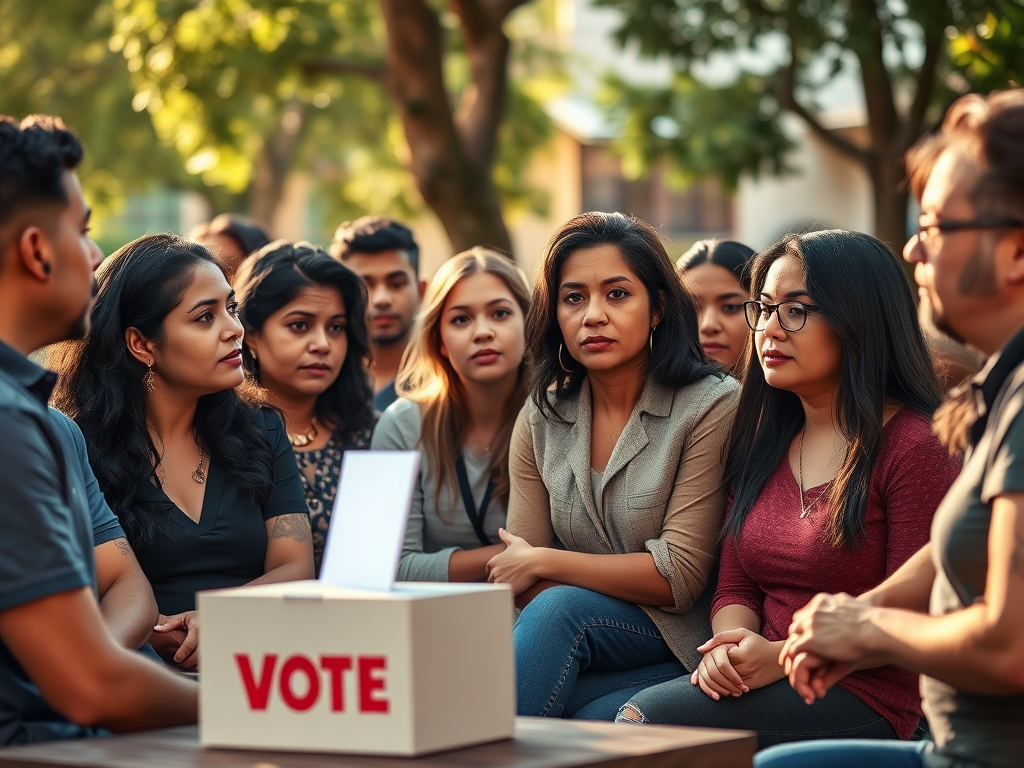
If 70% of Latinos Disapprove of Trump, Republicans Have a Midterm Problem
Republicans have spent the last few cycles talking about “Latino realignment.” In some places, the shift was real—especially among certain groups of Latino men, working-class voters, and specific regions.
But the latest national data is flashing a warning light: Latino disapproval of Donald Trump is high—and it’s tied to the two issues that most often decide midterms: the economy and everyday security.
A Pew Research Center report (fielded in October 2025) found 70% of Latinos disapprove of Trump’s job performance, 65% disapprove of his administration’s approach to immigration, and 61% say his economic policies have made conditions worse. Pew Research Center
That’s not just “bad vibes.” That’s a strategic vulnerability heading into 2026.
What the latest polling actually says
Two things can be true at the same time:
- Republicans have made gains with some Hispanic voters in recent cycles.
- Right now, a big majority of Latinos are not buying Trump’s direction.
Pew’s findings are the clearest headline number (the 70% disapproval), but other current polling is consistent with the broader idea that Trump’s standing is not strong and is shifting inside groups—including Hispanics. YouGov+1
Also important: Pew shows Latino views are highly polarized by 2024 vote choice—meaning some Latino Trump voters remain supportive, but the overall environment is still net-negative among Latinos as a whole. Pew Research Center
What this means for the 2026 midterms
Midterms are about turnout + persuasion. And for Republicans, high Latino disapproval creates three practical problems:
1) Suburbs become harder to hold
In competitive House seats—especially suburban districts where margins are thin—Latino voters don’t need to swing 20 points to matter. A few points can flip a seat if turnout rises or if GOP margins shrink.
2) It increases the “permission structure” to vote against Republicans
A lot of Latino voters are cross-pressured: they may be culturally moderate, religious, or skeptical of Democrats, but still concerned about immigration enforcement, dignity, and economic pressure. When disapproval is this high, it becomes easier to vote against the party in power—even if you don’t love the alternative.
3) Immigration enforcement anxiety becomes a turnout engine
Recent reporting on Hispanic anxiety around deportation and enforcement suggests something that matters in midterms: fear + disruption can mobilize. If people feel targeted, they don’t just disengage—they organize, donate, and vote (or they influence family members who do). AP News
How this shapes 2028, too
If Republicans go into 2028 with Trump still as the party’s defining symbol, they risk locking in a ceiling with Hispanic voters—especially in states where growth and coalition-building matter.
And there’s a second-order effect: immigration policy doesn’t just move Latino voters—it also moves non-Latino voters who react to perceived chaos, cruelty, or instability. Pew’s data suggests Latinos connect immigration policy with real-life harm to their community. That’s politically combustible. Pew Research Center
The outcomes to watch: 3 realistic scenarios
Scenario A: Republicans hold their Latino gains but still lose seats
If Latino disapproval stays high but turnout is low, Republicans might keep some of their 2024 improvements—yet still bleed enough support in key districts to lose the House.
Scenario B: Latino turnout rises and Democrats rebound strongly
If disapproval turns into motivation—especially among younger Latinos and mixed-status families—Republicans face serious risk in swing-state Senate races and tight House seats.
Scenario C: Republicans stabilize by changing tone + policy emphasis
This is the one Republicans would prefer: reduce the “threat” feeling, focus on tangible affordability wins, and rebuild trust through local messengers and credible reforms.
What Republicans must do to regain Hispanic support
If the goal is more Hispanic support in 2026 and 2028, the data points to a blunt reality: you can’t win a durable share of Latino voters while they feel targeted and economically squeezed.
Here’s what a credible GOP correction would look like:
1) Stop treating Latinos like an election-season demographic
Not Spanish-language ads in October. Not “family values” talking points. Actual year-round presence, local leadership development, and sustained community investment.
2) Move from “border theater” to workable policy
Pew’s numbers show immigration is a core driver of Latino disapproval. Pew Research Center
Republicans don’t need to become Democrats on immigration—but they do need a plan that looks like order + fairness, not humiliation + fear.
3) Make affordability real, not rhetorical
Pew also finds 61% of Latinos say Trump’s economic policies made conditions worse. Pew Research Center
That means “the economy” isn’t an automatic GOP win. If the GOP wants to compete, they need policies that clearly improve day-to-day life: housing costs, healthcare costs, wages, small business access, and stable prices.
4) Lead with credible messengers (and stop “parachuting” candidates in)
Latino voters respond to trust and proximity. If GOP leaders are mostly national figures with harsh rhetoric, they’ll pay for it. If they elevate local Hispanic Republicans who can speak credibly to community concerns, they can stop the bleeding.
5) Drop the disrespect
This is the part political strategists hate saying out loud: tone matters. Latino voters are not “too sensitive.” They are human. If a party’s posture feels contemptuous—toward immigrants, toward bilingualism, toward our neighborhoods—disapproval becomes identity-based, and that’s the hardest kind to reverse.
Bottom line
If 70% Latino disapproval holds anywhere near this level into 2026, Republicans can still win races—but they’ll be doing it with a major weakness in one of the country’s most important and growing electorates. Pew Research Center
And if Republicans want Hispanic support that lasts beyond one election, they’ll need to offer something that feels like respect + stability + tangible improvement—not just a culture-war pitch.


 Onda Times
Leave a comment